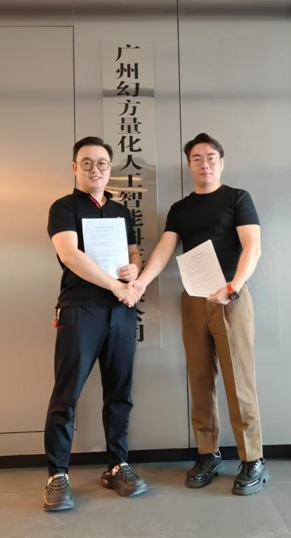
Recently, Xiaor (Shenzhen) Quantum Computing Technology Co., Ltd., together with Haofeng International Investment Holdings Co., Ltd., reached a deep strategic cooperation with Guangzhou Illusion Quantum AI Technology Co., Ltd. The three parties are leveraging Xiaor's self-developed APU annealing processor and the GQFS universal quantum static convergence system's new computing power framework to implement three core businesses: industrialized AI movie production, mass production of ultra-high-definition AI videos, and custom training of multi-modal AI models for film and TV. This aims to achieve a scalable commercial breakthrough for domestically-made ultra-low-power exa-scale computing in the AI entertainment industry.
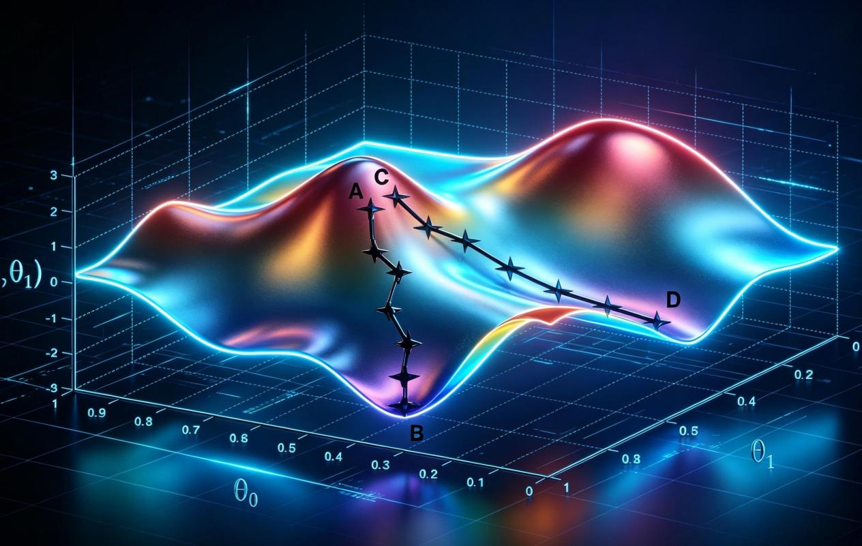
With generative AI and the film industry evolving so quickly, the underlying flaws of traditional GPU computing are holding back progress. Old-school backpropagation methods have issues like serial blockages, redundant calculations, and blind gradient updates, which lead to slow convergence for large models, cumulative errors in long videos, flickering scenes, and frequent content logic glitches. At the same time, traditional E-level supercomputers consume tons of energy and are expensive to maintain, making high-precision computing hard to use regularly in the entertainment industry.
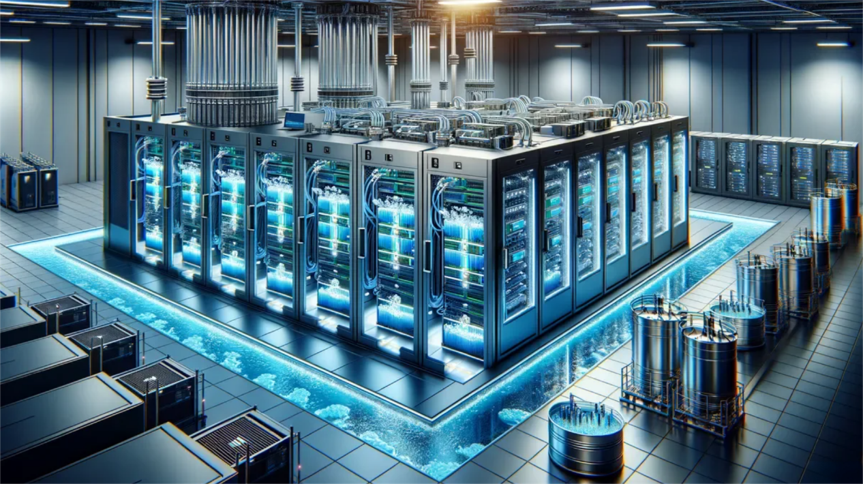
To tackle the industry's long-standing bottlenecks, Xiaoer has developed its own APU atomic-level annealing processor and equipped it with the original GQFS universal quantum static convergence system, which belongs to a quantum-inspired global solving architecture. This technology completely abandons the traditional trial-and-error iterative logic, achieving generational improvements in computing precision, efficiency, energy ratio, and stability through a high-dimensional global static convergence paradigm.
The GQFS architecture has four core advantages: global parallel computing that breaks the bottleneck of hierarchical sequential waiting, increasing hardware utilization from less than 10% to over 90%; achieving globally optimal solutions in a single operation without millions of gradient iterations, avoiding training jitter and local optimum issues; analytic static computation to eliminate floating-point accumulation errors, suitable for high-consistency production of long-duration film and TV content; and full compatibility with the CUDA ecosystem and mainstream large model frameworks, allowing existing business code to be seamlessly migrated and plug-and-play.
This cooperation deploys 8-card high-density APU computing nodes, whose comprehensive processing power in AI film and TV multimodal task scenarios matches that of traditional E-class supercomputing centers. Under the same business output conditions, compared to traditional GPU clusters, power consumption is reduced by up to 99%, enabling national-level supercomputing capacity with lightweight data center deployment. This breaks the industry barrier that high-end supercomputers are only for research use and significantly lowers the cost of high-end AI entertainment computing power deployment.
Relying on the ultra-low-power E-class computing base, the three parties implement three core business operations: mass production of ultra-high-definition AI videos and series, shortening rendering cycles and reducing finished product defects; overcoming challenges in long AI movies like style shifts and visual collapse, achieving industrial-level movie production for theatrical release; and jointly customizing and training vertical multimodal film and TV large models, building a domestically controlled, commercially iteratable entertainment AI model system.
The head of Guangzhou Phantom Quantitative AI Technology Co., Ltd. said that high computing costs, insufficient long-sequence precision, and excessive energy consumption are the biggest barriers to AI film industrialization. The Shaoer APU GQFS system achieves E-class supercomputer performance at civilian-level low power, with zero cumulative error and strong stability, providing a new computing foundation to support stable AI film mass production and commercial profitability.
The project leader of Shaoer Quantum Computing and Haofeng International stated that the traditional computing power industry is stuck in an inefficient cycle of stacking hardware and high energy consumption. This cooperation, relying on fundamental mathematical and algorithmic paradigm innovation, reconstructs the cost and efficiency system of computing power, opening a new era of lightweight E-class supercomputer commercial accessibility.
This three-party strategic cooperation is a milestone for the commercialization of domestically developed quantum-inspired computing. It marks that the domestic AI entertainment industry is officially saying goodbye to the high-power, low-efficiency traditional computing model and entering a new stage of ultra-low power, high precision, and domestic development, empowering high-quality industrialized AI film and TV production.